I had a terrible blow out with my roommate yesterday. After a year of living under her controlling rules and three weeks of irritated silence about our newest roommate - her recently acquired dog, despite her no pet policy - I lost the ability to just silently take it. This will likely resolve in my immediate eviction, despite my leaving the country in less than three months. I tried to turn to my closest friend for advice and solace, but that only lead to his chastising me in an even more affecting blow out. (We dated for a year and in that time my roommate objected to his presence in the apartment. In my attempt to appease both of them through various compromises and to preserve my place of residence, I infuriated both of them, eventually leading him to break up with me.) I'm reminded of something a former co-worker said to me during one of our arguments concerning our political differences: "You're a sheep. You'll always be a sheep," referring to his perception of my inability to take action and stand up for myself. It obviously still haunts me. This is my third round of roommates in the two years that I've lived in Taiwan, and with each group I've ended up getting cheated, which makes me question the strength of my own character more so than their insincerity.
I ended up browsing this dead space of a blog because even after reading their summaries, I couldn't remember if I had read either of James Baldwin's most famous novels. Apparently I had read one, though nearly eight years ago. Eight years....
In this space (curious to browse around the time period I had read Baldwin's work), I found someone fixated on a future of action but unable to instigate it. (These tirades feel alien to me, replaced by less determined new ones.) I found someone desperate to break away from the norm that surrounded and consumed her, but now I rarely interact with people who qualify under this norm. Nowadays the average, middle-class office worker's life seems no more real to me than a Dilbert comic strip.
At one point I spoke of the likelihood of meeting fellow travelers, but mostly I encounter young adults from affluent backgrounds experiencing exotic Asia either through bars and nightclubs (both of which are staples more of Western culture) or dating locals.
What I have in my life now, in place of those frustrated hopes of past, is freedom in all of its wayward open-endedness. I can just as easily do anything as I can do nothing. There is no one that I feel yields any control or say over my life (especially in the ways that once so preoccupied my thoughts). So though I can pick up and leave at any time, it also means that there is nothing connecting me anywhere.
I continue my shy, ghostly journey, not happy, nor sad, but at peace.
Wednesday, March 18, 2015

Sunday, April 14, 2013
a simpler beginning
About four months ago, in a fit, I made the definitive decision to start blogging again, and of course, nothing more came of it than a faint determination, lingering in the recessives of my daydreams. I fussed to myself about how to make my re-entrance, what new direction I would take, and even how many blogs I should maintain to keep my divergent endeavors organized and structured.
Yeah.
Taking my inflated ambitions back a notch, I thought I'd make things easier on myself and start off with a narrative (generally an easier format to write), a summation of where those four months went:
What was intended to be a temporary circumstance became a year and a half in a blink. I had been living on the hipster fringe of Logan Square: Schwinn riding, coffee house hopping, yoga practicing, and happily underemployed, reaping the gluttonous benefits of a borderline-vegan working at a certain natural food megastore. I occupied a barren room in a couple's barren apartment, where we clandestinely used a neighbor's secure network for internet and our electricity came free of charge via an extension cord out the back door (I never bothered to look where it led), but a break up and family issues lead to my getting the boot. I was steadily growing weary of the redundancy of my job, and the mundanity of my nowhere-going routine. I had only intended to come back to Chicago for a short while to settle my own ambiguous relationship, and meet my niece, who was born while I was backpacking through Southeast Asia. But the longer I stayed, the more irrevocably attached I became to my beloved niece and nephew, and the more irreversibly destructive my rapport became with my dearest, and perhaps only, close friend.
I found another temporary sublet to get me through the holidays, hastily finalizing a resume and sending out applications (a process that I had already started a year ago at snail's pace). My latest sublease booted me out at the end of January, and my last day of cashing and bagging followed soon after. I made one final trip back to St. Louis to say goodbye to two friends, seemingly from another lifetime, and to pack up yet another car-load of dusty boxes in the hopes of consolidating all my piles of past lives, perhaps fittingly, to the basement of the house I grew up in.
On Valentine's Day (a holiday I've always ignored but oddly this one seemed celebratory), I boarded a plane for Taiwan, and it is here in the outskirts of Taipei that I write from. I've grown rather fond of traveling over the past few years but tired of living out of a backpack, always on the move. So I signed a one-year contract with a buxiban (cram school), teaching English for lack of any other life skill to impart. Being reticent and introverted by nature, I feel a bit at odds in a job that requires energy and charisma (obvious deficiencies that haven't gone unnoticed), but these are attributes I wanted to put into practice, and perhaps one day glean minor pleasure from exerting.
Apart from teaching, I brought along the same cumbersome mental catalogue I've been dragging around for years, riddled with objectives both new and long overdue. Navigating my new job and environment has consumed most of my time in these prior two months, but now the requirements are settling into a reliable routine, and I feel like I can re-establish my studies without setting myself up for failure.
I spent this rainy morning curled up with Proust, and already I feel revitalized. May my next entry not take 4+ months to come.
I spent this rainy morning curled up with Proust, and already I feel revitalized. May my next entry not take 4+ months to come.
Wednesday, December 5, 2012
begotten
I read similarly on another long defunct blog that one can wait endlessly for the inspiration to return to writing, when in actuality writing is the only thing that can inspire me to write. Maybe this will fall through by morning: the void will return, the instigation unsubstantiated. Do I post one brooding entry after another, a sort of bloodletting for a new beginning? Much of what has transpired in these unspoken years will remain unresolved. No amount of typing will yield a satisfactory catharsis. Besides, catharsis really isn't my preoccupation: I have never been less fettered by past follies or faults than presently. And though still very much adrift, never has it been so much of my own volition. I approach the coming juncture willfully yet tentative, if not completely unprepared, having forsaken much of what I hold dear. By the end of the month I'll be homeless again, having procrastinated the necessary bureaucratic steps to know what options remain. Random entries will follow as my intentions remain inchoate.
Sunday, November 20, 2011
a psychology of power
"Everywhere is invasion, conquest, and domination, involving for the victors the necessity to keep and exercise power, and for the others the necessity to strive for power, in order to escape suffering and exploitation. This too is entirely functional. The conqueror is originally a pirate; he and his band do not share in the commonwealth, they have interests apart from the community preyed on. Subsequently, however, piracy becomes government, the process of getting people to perform by extrinsic motivations, of penalty and blackmail, and later bribery and training. But it is only the semblance of a commonwealth, for activity is directed. Necessarily, such directed and extrinsically motivated performance is not so strong, efficient, spontaneous, inventive, well structured, or lovely as the normal functioning of a free community of interests. Very soon society becomes lifeless. The means of community action, initiative, decision, have been preempted by the powerful. But the slaveholder, exploiters, and governors share in that same society and are themselves vitiated. Yet they never learn to get down off the people's back and relinquish their power. So some are holding on to an increasingly empty power; others are striving to achieve it; and most are sunk in resignation. Inevitably, as people become stupider and more careless, administration increases in size and power; and conversely. By and large, the cultures that we study in the melancholy pages of history are pathetic mixtures, with the ingredients often still discernible: there is a certain amount of normal function surviving or reviving - bread is baked, arts and science are pursued by a few, etc.; mostly we see the abortions of lively social functioning saddled, exploited, prevented, perverted, drained dry, paternalized by an imposed system of power and management that preempts the means and makes decisions ab extra. And the damnable thing is that, of course, everybody believes that except in this pattern, nothing could possibly be accomplished: if there were no marriage-license and no tax, none could properly mate and no children be born and raised; if there were no tolls there would be no bridges; if there were no university charters, there would be no higher learning; if there were no usury and no Iron Law of Wages, there would be no capital; if there were no mark-up of drug prices, there would be no scientific research. Once a society has this style of thought, that every activity requires licensing, underwriting, deciding by abstract power, it becomes inevitably desirable for an ambitious man to seek power and for a vigorous nation to try to be a Great Power. The more that have the power-drive, the more it seems to be necessary to the others to compete, or submit, just in order to survive. (A more importantly they are right.) Many are ruthless and most live in fear.
"Even so, this is not the final development of the belief in 'power.' For that occurs when to get into power, to be prestigious and in a position to make decisions, is taken to be the social good itself, apart from any functions that it is thought to make possible. The pattern of dominance-and-submission has then been internalized and, by its clinch, fills up the whole of experience. If a man is not continually proving his potency, his mastery of others and of himself, he becomes prey to a panic of being defeated and victimized. Every vital function must therefore be used as a means of proving or it is felt as a symptom of weakness. Simply to enjoy, produce, learn, give or take, love or be angry (rather than cool), is to be vulnerable. This is different, and has different consequences, from the previous merely external domination and submission. A people that has life but thwarted functions will rebel when it can, against feudal dues, clogs to trade, suppression of thought and speech, taxation without representation, insulting privilege, the iron law of wages, colonialism. But our people do not rebel against poisoning, genetic deformation, and imminent total destruction." PG
Tuesday, January 25, 2011
. . .
It's gone. Yesterday I got off the bus at Sukhothai and absent-mindedly left my travel journal behind. The guest house owner was kind enough to call the bus station, the bus company, even acquired the phone number for the bus driver but to no avail. He made two trips to the bus station today as well and now I must come to a bitter acceptance. All my thoughts and notes from India, Nepal, Peru, and the beginning of Southeast Asia, gone. Only one other time have I misplaced a notebook, and it was due to the same reason: neglect. (I was carrying a small notebook in my back pocket at all times and had been doing so with dwindling inspiration for years, but I stopped after this sparsely used one went missing.) Again, I haven't been writing, sincerely at least, and the manifestation is departure.
I've lost and left behind so much. Death, distance, and disassociation. And now my traveling companion. I write here in remembrance of lost spaces for my words, seeking familiarity to console my solitude.
I've lost and left behind so much. Death, distance, and disassociation. And now my traveling companion. I write here in remembrance of lost spaces for my words, seeking familiarity to console my solitude.
Friday, October 1, 2010
Friday, August 6, 2010
Monday, July 19, 2010

Thursday, June 3, 2010
of conflict and not speaking
dear self, for future reference:
"Wear your learning, like your watch, in a private pocket, and do not pull it out and strike it merely to show you have one. If you are asked what o'clock it is, tell it, but do not proclaim it hourly and unasked, like the watchman." Lord Chesterfield
"Wear your learning, like your watch, in a private pocket, and do not pull it out and strike it merely to show you have one. If you are asked what o'clock it is, tell it, but do not proclaim it hourly and unasked, like the watchman." Lord Chesterfield
Monday, April 12, 2010
le artiste manque v. family
A few excerpts from my current reading (The Denial of Death by Ernest Becker) to hold this blog over while I confront related engagements through reticence rather than composition...
"The answer is not far to seek: the depressed person avoids the possibility of independence and more life precisely because these are what threaten him with destruction and death. He holds on to the people who have enslaved him in a network of crushing obligations, belittling interaction, precisely because these people are his shelter, his strength, his protection against the world. Like most everyone else the depressed person is a coward who will not stand alone on his own center, who cannot draw from within himself the necessary strength to face up to life. So he embeds himself in others; he is sheltered by the necessary and willingly accepts it. But now his tragedy is plain to see: his necessity has become trivial, and so his slavish, dependent, depersonalized life has lost its meaning. It is frightening to be in such a bind. One chooses slavery because it is safe and meaningful; then one loses the meaning of it, but fears to move out of it. One has literally died to life but must remain physically in this world. And thus the torture of depressive psychosis: to remain steeped in one's failure and yet to justify it, to continue to draw a sense of worthwhileness out of it."
"The answer is not far to seek: the depressed person avoids the possibility of independence and more life precisely because these are what threaten him with destruction and death. He holds on to the people who have enslaved him in a network of crushing obligations, belittling interaction, precisely because these people are his shelter, his strength, his protection against the world. Like most everyone else the depressed person is a coward who will not stand alone on his own center, who cannot draw from within himself the necessary strength to face up to life. So he embeds himself in others; he is sheltered by the necessary and willingly accepts it. But now his tragedy is plain to see: his necessity has become trivial, and so his slavish, dependent, depersonalized life has lost its meaning. It is frightening to be in such a bind. One chooses slavery because it is safe and meaningful; then one loses the meaning of it, but fears to move out of it. One has literally died to life but must remain physically in this world. And thus the torture of depressive psychosis: to remain steeped in one's failure and yet to justify it, to continue to draw a sense of worthwhileness out of it."
* * *
"Men aren't built to be gods, to take in the whole world; they are built like other creatures, to take in the piece of ground in front of their noses. Gods can take in the whole of creation because they alone can make sense of it, know what it is all about and for. But as soon as a man lifts his nose from the ground and starts sniffing at eternal problems like life and death, the meaning of a rose or a star cluster - then he is in trouble. Most men spare themselves this trouble by keeping their minds on the small problems of their lives just as their society maps these problems out for them. These are what Kierkegaard called the 'immediate' men and the 'Philistines.' They 'tranquilize themselves with the trivial' - and so they can lead normal lives."
* * *
"The neurotic's frustration as a failed artist can't be remedied by anything but an objective creative work of his own. Another way of looking at it is to say that the more totally one takes in the world as a problem, the more inferior or 'bad' one is going to feel inside oneself. He can try to work out this 'badness' by striving for perfection, and then the neurotic symptom becomes his 'creative' work; or he can try to make himself perfect by means of his partner. But it is obvious to us that the only way to work on perfection is in the form of an objective work that is fully under your control and is perfectible in some real ways. Either you eat up yourself and others around you, trying for perfection; or you objectify that imperfection in a work, on which you then unleash your creative powers. In this sense, some kind of objective creativity is the only answer man has to the problem of life. In this way he satisfies nature, which asks that he live and act objectively as a vital animal plunging into the world but he also satisfies his own distinctive human nature because he plunges in on his own symbolic terms and not as a reflex of the world as given to mere physical sense experience. He takes in the world, makes a total problem out of it, and then gives out a fashioned, human answer to that problem. This, as Goethe saw in Faust, is the highest that man can achieve."
Friday, February 12, 2010
mr. sinister and his little blue booties

Starting today I am officially unemployed (though I was on leave so I haven't actually shown up to the factory in some time now). Farewell anachronic test station! Farewell dot matrix printer! Farewell acoustic-traumatizing, industrial cooling fans! Farewell beige, padded cubicle walls! Farewell blue, bell-bottomed pantsuit! Oh wait, girl in photograph is not a likeness. Farewell soul-eating wage-slavery! Farewell!!!
So... what now?
So... what now?
[...what it feels like from the inside.]
Tuesday, February 2, 2010
then
Eight
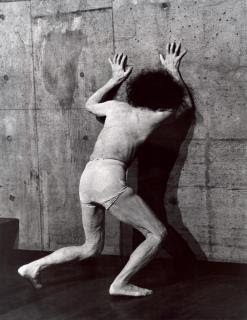
"I weep not with remorse but for the fear that I shall not be able to satisfy my passion." ('Tis A Pity)
Nine
No More Masterpieces
Ten
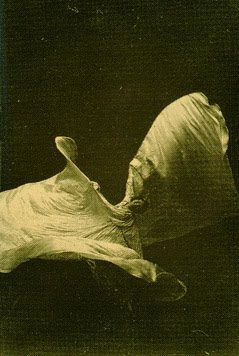
...

"I weep not with remorse but for the fear that I shall not be able to satisfy my passion." ('Tis A Pity)
Nine
No More Masterpieces
"One of the reasons for the asphyxiating atmosphere in which we live without possible escape or remedy - and in which we all share, even the most revolutionary among us - is our respect for what has been written, formulated, or painted, what has been given form, as if all expression were not at last exhausted, were not at a point where things must break apart if they are to start anew and begin fresh." Artaud
Ten

...
Tuesday, January 26, 2010
you've done enough
A long time ago, in a thought now far, far away, I was going to vent my frustrations about a semi-forced viewing of Avatar, a movie of which I knew near zilch about and was content having it remain so. A one and a two sum it up about parallel to my own repulsions, and probably far more eloquently than I'm capable of outputting these days.
Its characters are stubbornly two-dimensional (irony intended), either good or bad, and Jake alone is allowed to briefly transition from one state to the other. The natives are good, because they are unsullied, they are innocent, they live by traditional values and know their place in the order of things. The bad guys are cartoonishly evil, and likewise without depth. In equal part greedy and sadistic, they need to be asked to please not kill the children, which they really don’t mind doing if it means getting their hands on the precious ore of Pandora more expeditely. Hell, they might even throw in the killing for free. Which is why, in the end, Avatar is against imperialism in the same way that Tom and Jerry is against cats. It is a caricature of what critical cinema could and ought to be and indeed has been and is, if altogether too infrequently.
Avatar is the cinema version of an ongoing trend: the piles of logo-stamped reusable shopping bags at the grocer, the urbanites sporting the fashion meets function that is SIGG... the flashy, feel-good marketing of an ideology not for change but to assure us we're buying and entertaining ourselves just right as we are.
* * *
Enough! From a gripe of "I" to a gripe of "us", this blog consistently feels as if it's being dragged down too cynical of a path. My next entry will be a sort of where I am now and what do I do from here (being a new year and all). The writing of this entry has been delayed due to my recent demotion to au pair.
Tuesday, December 29, 2009

Saturday, December 26, 2009
Thursday, December 24, 2009
masking the gap
"The rich and the poor no longer live in two nations, at least not socially. Economic divisions may be more pronounced than ever, but we support the same football teams, watch the same television programmes, go to the same movies. Mass culture is for everyone, not just the masses." Lulled by the celebritariat
Somewhat ironically, in the same publication a rather ignorant article (though worth reading for the data despite the author's neglect to analyze its implications to their fullest) promotes the benefits of meritocracy (via the growth of online gaming networks) and how industry can instantaneous collect this data to better gear their products to the consumer (who is so generously referred to by the "father of virtual economics" as the "hairless monkey"):
"From Castronova’s perspective, the fundamentally measurable and manipulable nature of electronic media means that the time for setting theories and ideals above practical observations is now largely gone. It is no longer possible to pretend that you can change what people are like or, indeed, what they like. It’s all about using what you know."
This comment is never directly addressed. Giving itself over so blatantly to the mass of mediocrity's demands, the online gaming industry only further imitates existing industries' thirst for exploitation of interests, but with the innovative advantage of immediate adaptation of the product, which as a byproduct inhibits any chance of adaptation or growth of the consumer. Why should one question one's ridiculous demands for base gratification when they are so readily catered? This mentality spreads far beyond the virtual world.
Instead the author praises the rediscovered sense of community found in playing online checkers on Facebook, never questioning why people feel the need to play such games online, denying themselves the intimacy of immediate conversation and sometimes drawing these games out ridiculously over the course of days depending on how often they sign in to their accounts. The virtual world of gaming and social networking might be becoming more "real" but only to the extent that it is increasingly modeling our consumer-driven capitalistic world, sweatshops and all. They bring profit to the few who excel at exploiting the masses' impulses and increased complacency to the many who are thought of as no more than the compiled statistics of their purchases, which they proudly list on their Facebook pages.
"Behind this micro-transaction model is the secret of these games companies’ success: data—and data of a kind that no other online business can match. The biggest online games companies now record more than 1bn data points every day, measuring everything from whether blue or red objects generate more sales to whether a certain phrasing improves the rate at which users click on a particular purchase. They can also see, for instance, exactly when the majority of players give up, and then release several subtle variations on that precise point to different segments of their audience, recording what works best and following it up with targeted email questionnaires. And games companies have only begun to scratch the surface of what’s possible. As Nicholas Lovell, an industry analyst, consultant and founder of the blog Gamesbrief, put it to me, “I can’t think of a single media company that couldn’t learn from the world of social and online games”—whether this is about the power of community, of precisely calibrated rewards, or of simply creating a virtual location so appealing that people will make it a part of their online lives."
Belittled into these statistics, every opinion is given equal weight and little thought is given to one's credentials or authority on a subject. Instead the perkiest voice gets the spotlight, so long as it is willing to promote the egalitarianism of the dollar. We are all equal now, and the comfort of knowing that our spokespeople are just as everyday as we are and that we are just as fashionable as they are, allows us to rest quietly, purchasing more and thinking less.
Cheers to a peachy future.
Tuesday, December 22, 2009
Rhinoceros
LOGICIAN: [to the OLD GENTLEMAN] Here is an example of a syllogism. The cat has four paws. Isidore and Fricot both have four paws. Therefore Isidore and Fricot are cats.
OLD GENTLEMAN: [to the LOGICIAN] My dog has got four paws.
LOGICIAN: [to the OLD GENTLEMAN] Then it's a cat.
BERENGER: [to JEAN] I've barely got the strength to go on living. Maybe I don't even want to.
OLD GENTLEMAN: [to the LOGICIAN, after deep reflection] So then logically speaking, my dog must be a cat?
LOGICIAN: [to the OLD GENTLEMAN] Logically, yes. But the contrary is also true.
BERENGER: [to JEAN] Solitude seems to oppress me. And so does the company of other people.
JEAN: [to BERENGER] You contradict yourself. What oppresses you - solitude, or the company of others? You consider yourself a thinker, yet you're devoid of logic.
OLD GENTLEMAN: [to the LOGICIAN] Logic is a very beautiful thing.
LOGICIAN: [to the OLD GENTLEMAN] As long as it is not abused.
BERENGER: [to JEAN] Life is an abnormal business.
JEAN: On the contrary. Nothing could be more natural, and the proof is that people go on living.
BESENGER: There are more dead people than living. And their numbers are increasing. The living are getting rarer.

* * *
Within scattered dying cells (as if to pass this knowledge on to the newer ones before they expire) an urge to remark upon the various posted quotes rumbles, nearly mistakable for indigestion. Yet all my mental reflections wisp about obtusely with every effort for transcription feeling forced and unfruitful. (Even so little as a single-lined e-mail feels forged.) I expressed this lamentation and the advice I received was to keep reading, keeping observing, keep taking in all this stimulus as feed - don't focus on the output as that is the natural outcome of all this intake. So I think of these posts (with your patience) as me periodically dropping my underpants to see if anything comes out. With the right mix of nutrients, perhaps something solid, healthy, can be produced.
Monday, December 7, 2009
flowers
"It is the same universe from which he was excluded, as far away and inaccessible as the other, and it discloses totality because of its remoteness. This absences of connection with external reality is transfigured and becomes the sign of the demiurge's independence of his creation. He works at arm's length, he stands clear of the object he is sculpting. In the realm of the imaginary, absolute impotence changes sign and becomes omnipotence. " Sartre on Genet
Wednesday, December 2, 2009
the distance prolonged
10.27.09 | a snapshot

11.4.09 | a mood
"thick in consistency, cold and dry in temperament"
11.5.09 | an excerpt
...why can't I let moments pass, ebb and flow according to their transitory nature? Again, I find within myself a desire to cling, even after the moment has peaked and begun its ever diminishing descent, still I try to preserve through delirium an image no longer consistent with its reality. Can it be fixed, or more critically, should it be fixed? I flail frantically, trying to assert control over my environment instead of allowing events to flow naturally. If I am inherently solitary why do I so desperately yearn for intimacy through connection with another individual - is this desire not contradictory? Maybe I still have the instinctual inclination to interact with my surrounding, to exist physically, palpably, but experiencing this transfer through some single, targeted entity is all that I can handle, the limit of my character. This is probably in part falsified and the aversion is really controlled by some inherent fear, or rather that the desire for more is so faint that it conversely feels the other way 'round whereby any inclination I have for more is only a manifestation of a social pressure, a desire to emulate the behavior of others who appear similar but are not the same.
[By chance today...
the video origin of accompanied stills.]
I am attempting to experience all of life through a single human channel, but why through the medium of another and not experience life raw on my own? Always this need for a filter, as if I am by nature too susceptible to be so naked with life. How can I build up the necessary callouses when always wearing gloves? This experience with life is not provoked by an inclination to interact with a vast world but is only used vainly to further dissect my own behavior, to manifest some sort of outpouring that would give my being a sense of sincerity, a genuineness that would make it appear more tangible, less tender. Such guile. I am becoming too vague, getting lost within my own skewed tendencies, protectively obscuring by words, not clarified...
Subscribe to:
Posts (Atom)